Curious Inc started in 2002 as a student business. Curiosity was the foundation, and that has never changed.
We started in 2002 as a student business. Young, with nerve, and wanting to build something that didn't exist yet.
The first was Dation: software for driving schools, built because it simply didn't exist. Driving schools kept their scheduling and administration on paper. We built what wasn't there — a pattern that would repeat many times.
In the years that followed, companies emerged in education, digital platforms, data, sensor technology and logistics. Some we built ourselves. Others we acquired because we could see they would grow faster with us than alone. What started as separate initiatives became an ecosystem in which technology, data and people move between the companies.
And we have had an enormous amount of fun doing it. That is not a footnote — it is why people stayed.
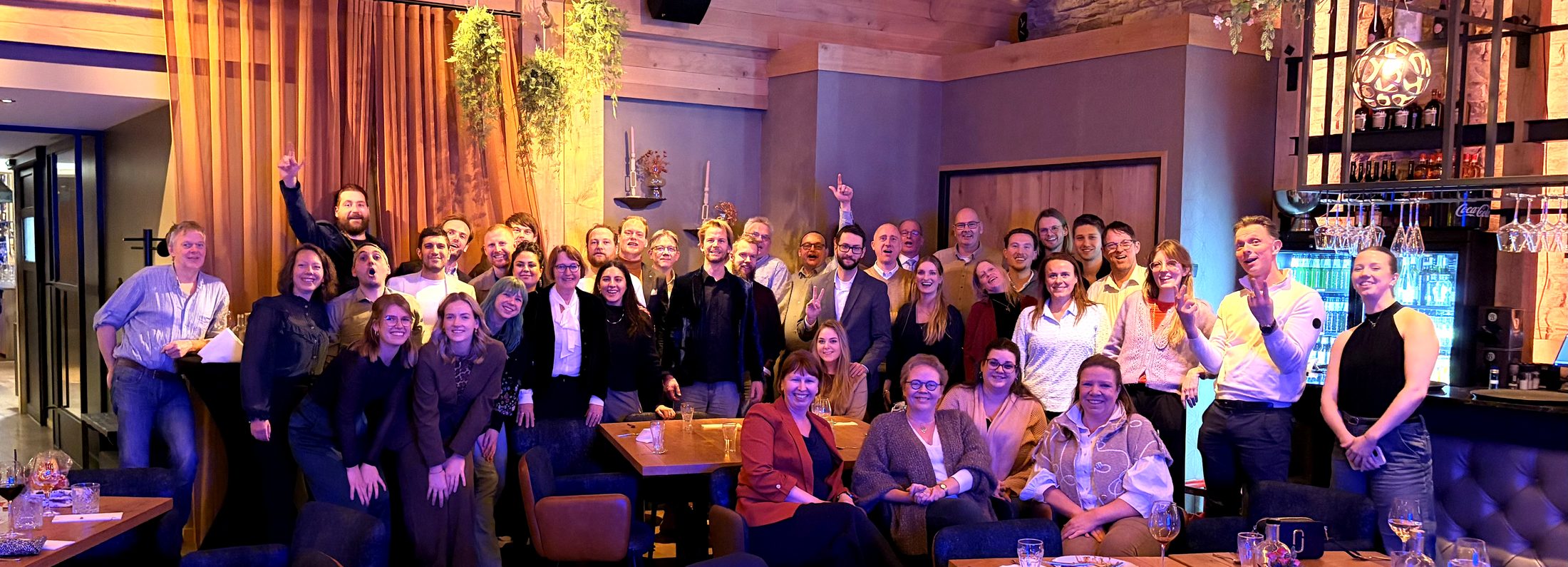
You can run a student business on enthusiasm. A group of more than fifty people across five companies, you cannot.
The bigger we got, the more we needed better processes and a more professional way of working. In 2024 that came together: a management team, a salary structure, a formal corporate structure — and a clear strategy.
Since then, acquisitions are no longer opportunities that happen to pass by but choices that fit. Growth accelerated. It is the least spectacular change in twenty years, and possibly the most important.
Colleagues from the first years are still with us. In an industry where people move every two years, that says more about a company than a culture page ever could.
The team has grown and changed: experienced people joined, of different ages and different educational backgrounds. That last part is a choice, not a compromise — curiosity is not a diploma, and the best questions rarely come from one direction.
We believe most progress doesn't come from a grand plan, but from someone who doesn't understand something and wants to know anyway.
So we work from question to product, not the other way around. First find out whether it can be done. Then whether anyone wants it. Only then build.
And we believe the best solution is often the smallest. Yeshugo connects vehicles by leaving hardware out. Sensoterra saves water by putting one sensor in the ground. Sustainability rarely means more technology.
Our companies are independent. They have their own customers, their own market and their own way of working. We keep it that way — a company run from a holding loses whatever it was good at.
What we do share: technology, data infrastructure, experience and people. Someone solving a sensor-data problem at Sensoterra is helping Yeshugo too. What GoCurioo builds in AI platforms reaches all the others.
And we share an attitude. Curious, impatient, and not big on meetings.
Curious Inc is not an investor who drops by for the quarterly numbers. We have started, grown, acquired and integrated companies ourselves. We know what it's like when a release isn't ready, when a big customer walks away, and when something actually works.
That makes us a different conversation for founders. We ask different questions, because we've been asked them.
The next twenty years come down to a handful of things: using less energy, wasting fewer raw materials, producing food without exhausting the soil, and laying out our country for a climate that is changing.
None of those is a technological problem alone. They are organisational problems. They require people to work differently, and organisations to make decisions based on what they actually know rather than what they assume.
That is what we build for. With the companies we already have, and with the ones still to come.
Innovation is not a department here. It is a way of working that we deliberately take outside — to universities and colleges, and into the ecosystems where these questions come together.
Not one company here came out of a strategy document. Each of them grew from a question someone asked and nobody had answered.
See the full timeline